
There are hundreds of singing bowls in the world, and no two sound exactly alike. Catalog photos, price tags, and even expert opinions can only take you so far. At some point you have to hold a bowl in your hands, strike it, and notice what happens inside you. Jansen's handbook offers a simple, repeatable ritual for that moment — one that works whether you are in a specialist shop, at a market stall in Kathmandu, or testing bowls a friend has lent you.
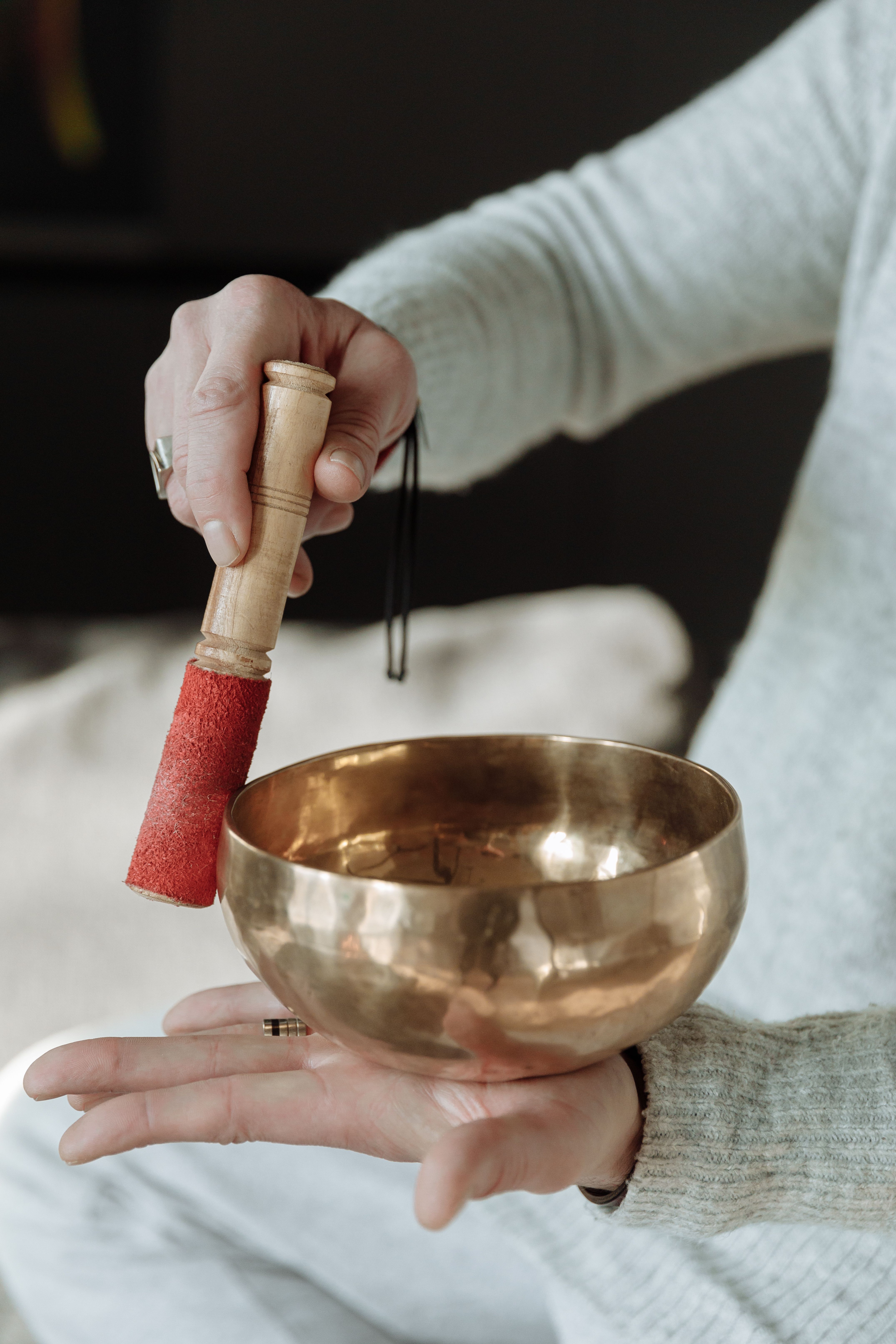
Step 1: Create a Quiet Foundation
Place the bowl on a soft cloth — silk or folded cotton works well. The cloth cushions the bowl and prevents it from sliding, but more importantly it signals to your nervous system that this is a deliberate, unhurried process. Rushing through a row of bowls while chatting with a shopkeeper rarely produces a clear answer.
Hold the bowl lightly with one or two fingers at the center of its base. You are not gripping it; you are steadying it so the metal can vibrate freely when struck.
Step 2: Strike and Listen
With a padded mallet, strike the outer rim once — not too hard, not too soft. Let the sound develop naturally without immediately striking again. Close your eyes if it helps.
Ask yourself a single question: does this tone feel inviting? Not "Is it in tune?" or "Is it expensive enough?" but simply: do I want to hear more?
If the answer is yes, or even a curious maybe, continue to the next step. If something in you pulls back — tightness, irritation, a vague sense of "no" — set that bowl aside. It may be a fine instrument for someone else; it is simply not your bowl right now.
Step 3: Hold It in Your Palm
Lift the bowl and rest it in your open palm. Strike the rim again with the same gentle force. Notice whether the vibration travels into your hand, up your arm, into your chest. A bowl that resonates with you will often feel as though it is "sitting into" your body rather than merely sounding beside you.
Step 4: Bring It to Your Center
This step surprises many first-time buyers. Hold the bowl close to your abdomen, just below the navel, and strike once more. Some people feel warmth, tingling, or a subtle shift in breathing; others feel nothing dramatic at all. Both responses are valid. What you are watching for is any strong negative reaction — discomfort, anxiety, an urge to pull away.
Jansen is clear on this point: a negative bodily response means this is not the right bowl for you at this time. Not forever, perhaps, but not today.
Step 5: Listen With Your Whole Body
Throughout the process, treat your ears as only one part of your listening apparatus. Your skin, your bones, your breath, and your gut all receive vibration. The "right" bowl is less about hitting a specific note on a tuner and more about a felt sense of welcome — as though the sound recognizes you, or you recognize it.
When You Have Found It
You may need to test five bowls or fifty. You may return to a shop twice before deciding. What matters is that the choice comes from direct experience rather than from a seller's enthusiasm or a beautiful inscription on the metal.
Take your bowl home, play it in quiet moments, and let the relationship deepen. Selection is only the first chapter.